
We reduce exposure before it becomes an incident.
We test AI, applications and modern infrastructures with offensive techniques and continuous security operations.
Trusted across regulated and critical-infrastructure environments
- 20+
- years offensive security
- 24/7
- EU-based iSOC
- 6
- proprietary platforms
Only verified identities see anything at all.
Methodologies, standards and compliance we operate against
By the numbers
Two decades of breaking systems — turned into defense.
- 0+ Offensive engagements delivered
- 0 yrs Of hands-on offensive security
- 0% External attack surface removed with cloaking
- 24/7 Continuous EU iSOC operations
Cumulative BUC delivery across offensive, invisibility and detection programs.
Most companies secure systems. We control exposure.
BUC is an AI-native cybersecurity company combining:
- Offensive Security
- AI & LLM Security
- Threat Intelligence
- Zero Trust Invisibility
- 24/7 Security Operations
Our platforms are built from real attacks — not theoretical models.
AI and connectivity have expanded the attack surface.
Organizations are deploying:
- LLM-based assistants
- Automated workflows
- Connected infrastructures
Without understanding:
- What is exposed
- How systems can be manipulated
- Where attackers can enter
The problem is no longer just attacks.
It's exposure.
A new model for security in the age of AI
The BUC Security Lifecycle
We don't just secure systems.
We control how and when they can be seen.
- 01
BREAK
- Red team operations
- Web · Mobile · Network testing
- IoT · SCADA assessments
- Disaster simulation
We simulate real attackers.
- 02
UNDERSTAND
- AI Security & LLM testing
- Threat intelligence
- MediaMiner & buDarkPortal
- Cyber risk analysis
We analyze and contextualize risk.
- 03
HIDE
- Zero Trust Network Cloaking
- Infrastructure invisibility
- Identity-based access
Access doesn't mean visibility.
- 04
MONITOR
- AI-driven MDR (buMDR)
- 24/7 SOC operations
- Real-time correlation and incident response
Security doesn't stop. Neither do we.
We don't just secure systems.
We control how and when they can be seen.
Our Platform
A unified ecosystem
Six proprietary platforms built from real-world offensive engagements.
Intelligence
Discover threats, leaks and external exposureExposure & Validation
Identify weaknesses and validate risksInvisibility
Zero Trust Network CloakingInside the platforms
Built to be operated, not just demoed.
A look at the interfaces our teams run every day across cloaking, detection and intelligence.


buGhostWall · Zero Trust Network Cloaking
If attackers can't see it, they can't attack it.
buGhostWall removes exposure entirely:
- No visible assets
- No open ports
- No attack surface
Your infrastructure stops existing for anyone who isn't authorized to see it.
BUC iSOC
Detection is not enough. You need continuous operations.
From logs to decisions — continuously.
- 24/7 monitoring
- Real-time analysis
- Incident detection and response
- AI-assisted correlation
Security doesn't stop. Neither do we.
Real-world scenarios
Examples of what we identify
- LLM prompt injection and data leakage
- Exposed credentials in infrastructure
- Sensitive data in images and social media
- Dark web leaks and ransomware exposure
- Lateral movement inside enterprise networks
- Exposed management panels and insecure configurations
We don't describe risks. We demonstrate them.
Field results
What partners say after the engagement
Client identities are protected. Sectors and roles are real.
-
They didn't hand us a report. They showed us, live, how an attacker would already be inside — then made that path disappear.
European critical-infrastructure operator Energy -
The AI red team surfaced prompt-injection paths in our LLM assistant that no automated scanner had caught. It changed how we ship AI.
Financial services group Finance -
With buGhostWall our external attack surface effectively went dark. Scans that used to light up now return nothing.
Public-sector agency Government
Why BUC
What sets BUC apart
- 20+ years in offensive security
- AI-native approach across every layer
- Proprietary platforms built from real attacks
- Real-world attack simulations, not theoretical models
- Integrated 24/7 SOC operations
We don't follow the market.
We test what the market doesn't see yet.
From the lab
Research drives our methodology
Our findings shape how we attack, defend and operate.
Intelligence & research
From the BUC Research Lab
Advisories, threat analysis and applied research from the team behind the platforms.
-
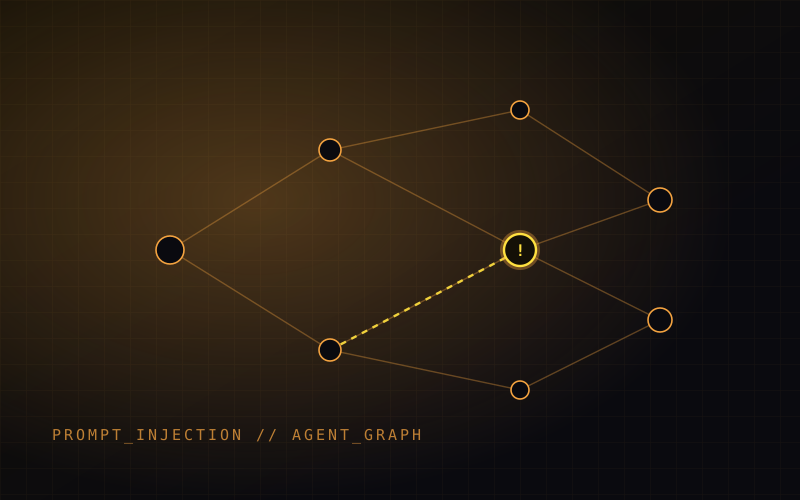 Advisory
 Prompt-injection chains in tool-calling LLM agents
How chained tool calls turn a single injected instruction into data exfiltration across an agent framework.
-
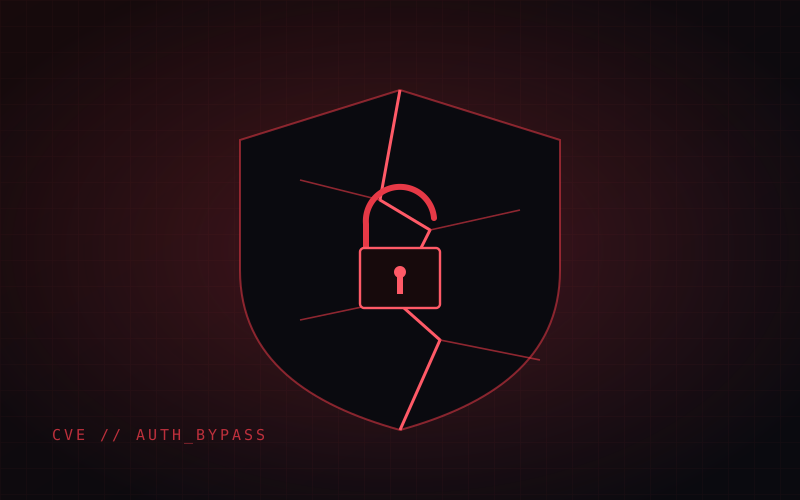 CVE
CVE Authentication bypass in an enterprise VPN appliance
Found during a red-team engagement, coordinated-disclosed and tracked in the CVE program.
-
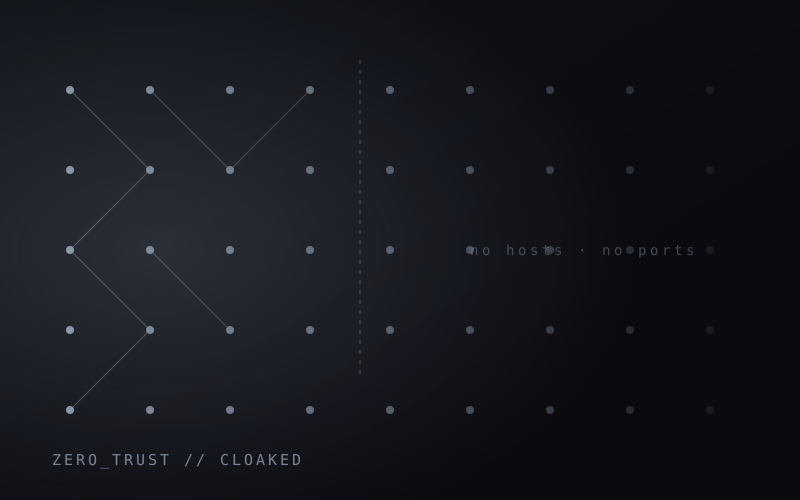 Whitepaper
 Zero Trust Network Cloaking: removing the attack surface
The architecture behind buGhostWall and why invisibility beats detection at the perimeter.
-
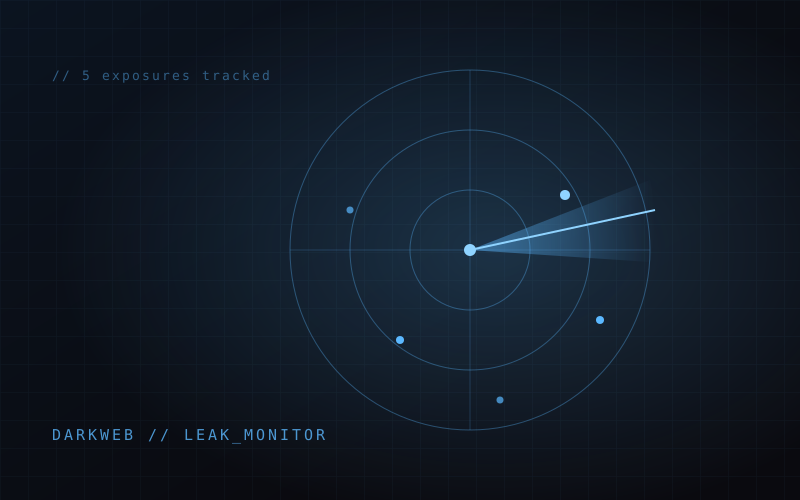 Threat brief
 Dark-web leak monitoring: from exposure to response
What continuous underground monitoring surfaces before it becomes an incident.
Governance & Leadership
Security is also strategy.
Senior leadership and legal counsel, embedded across the lifecycle.
Frequently asked
What people ask us
What is AI Security?
AI Security is the process of identifying and mitigating risks in AI systems, including LLMs, autonomous agents and automated workflows that depend on machine-learning components.
What is LLM Security Testing?
LLM Security Testing evaluates how language models can be manipulated, exploited or forced to expose sensitive data, covering prompt injection, jailbreaks, model extraction and tool abuse.
What is Zero Trust Network Cloaking?
Zero Trust Network Cloaking is a security model in which infrastructure is invisible by default and only becomes reachable to verified, authorized identities. Hosts, ports and services do not respond to anyone else.
Understand your real exposure.
Talk to the team that breaks systems for a living — and ships the platforms that defend them.
[email protected] · PGP fingerprint on request